
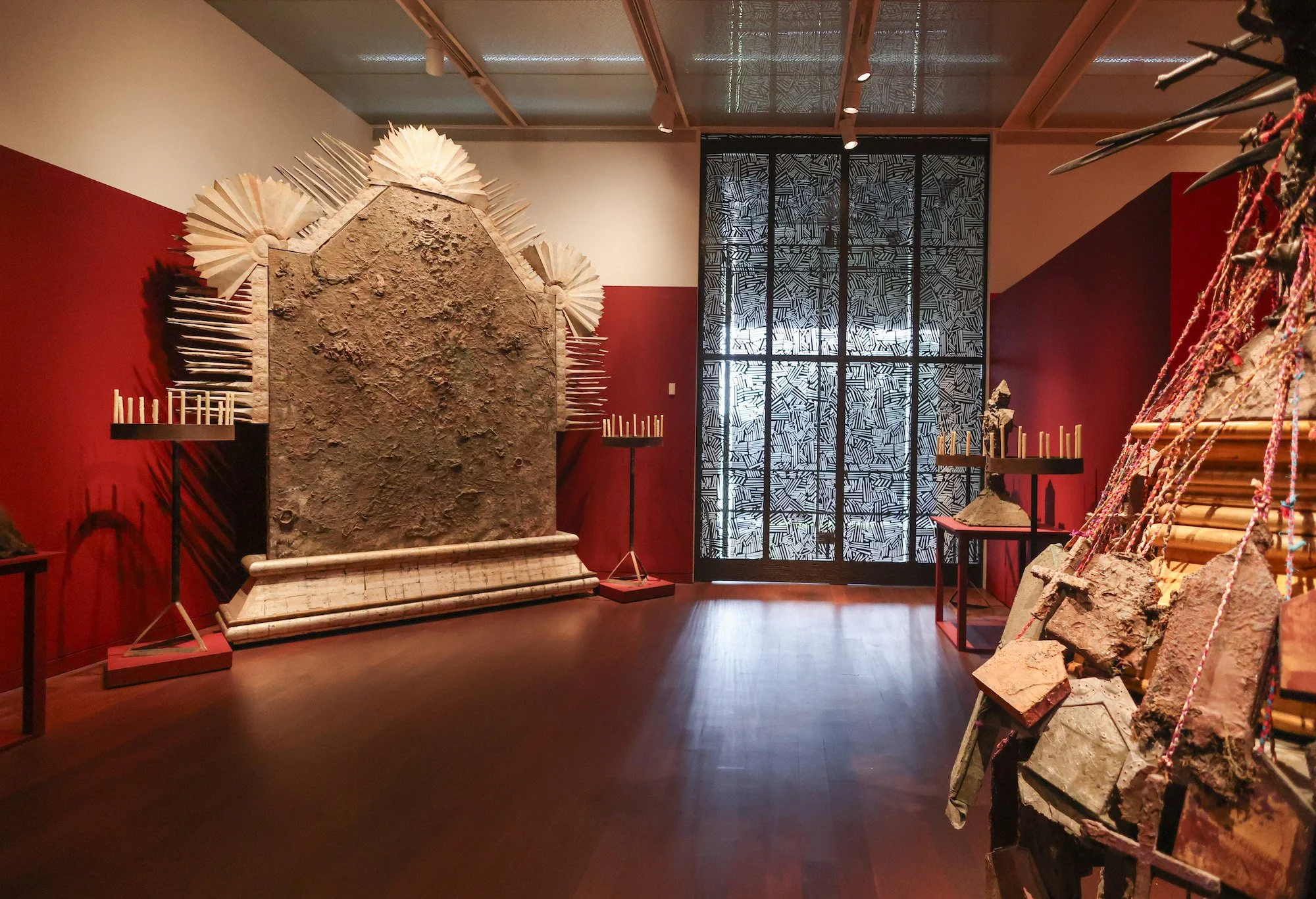

In a tribute to the life and legacy of Michael Tracy, The Elegy of Distance at the McNay Art Museum revisits the work of an artist whose practice spanned painting, sculpture, ritual performance, and craft. On view through July 27, the exhibition marks both a return and a farewell: the McNay launched Tracy’s career with his debut show in the 1970s and now presents the final exhibition he helped shape before his passing in June 2024. Organized by René Paul Barilleaux in collaboration with Christopher Rincón, The Elegy of Distance frames Tracy not just as a visionary maker but as a queer artist whose engagement with border politics, spirituality, and collaborative craftwork forged a body of work that transcends conventional categories. In this conversation, Christopher Rincón, President of the Michael Tracy Foundation and Director of the River Pierce Foundation, reflects on Tracy’s fusion of activism and art, his intimate relationship to place, and the enduring resonance of his singular visual language.
Xuezhu Jenny Wang: Can you share specific details about how Tracy engages with activism and border issues?
Christopher Rincón: The most significant action Michael devised in collaboration with other artists was the performance known as Sacrifice II: The River Pierce. The piece was staged as a Via Crucis procession (The Stations of the Cross) in honor of the procession performed each Good Friday in his adopted border home of San Ygnacio since its founding. Michael’s procession, however, presented “stations” commissioned by collaborators whose installations reflected obstacles encountered by Latin American immigrants traversing the harsh landscape in search of political asylum. The performance culminated in the immolation of his iconic sculpture Cruz: La Passion, whose destruction mirrored the death and resurrection of Christ, in hopes that the ritual action would resurrect relief for asylum seekers as well as for the health of the Rio Grande. The Via Crucis theme in his painting oeuvre continued to address the themes throughout the decades of production, mixing high art, artisanal craft, theology, and social justice in a way unique to Michael and his place in geography.
Image Credit: Installation view of Michael Tracy: The Elegy of Distance. Courtesy of McNay Art Museum, photo by Jacklyn Velez.