

As the United States approaches its 250th anniversary in 2026, we find ourselves at a pivotal crossroads in the national conversation about identity, memory, and who gets to tell our story. This momentous semiquincentennial coincides with the centennial of Negro History Week, which became Black History Month in 1976. We are also approaching the 60th anniversary of the Voting Rights Act. All are powerful reminders that the story of America is complex, multifaceted, and still unfolding.
Celebrating 250 years of nationhood and the centennial of Black history being formally commemorated in America is a profound reminder of how far we’ve come in recognizing and institutionalizing the celebration of African American contributions to our national narrative.
At the heart of that unfolding narrative are America’s museums. Often regarded as the most trusted sources of public information — more than the media or the government, according to a 2021 American Alliance of Museums study — museums are guardians of truth. They preserve our collective memory through the stewardship of artifacts, oral histories, documents, and traditions. And yet, even these institutions are under threat.
Continue reading on Hyperallergic
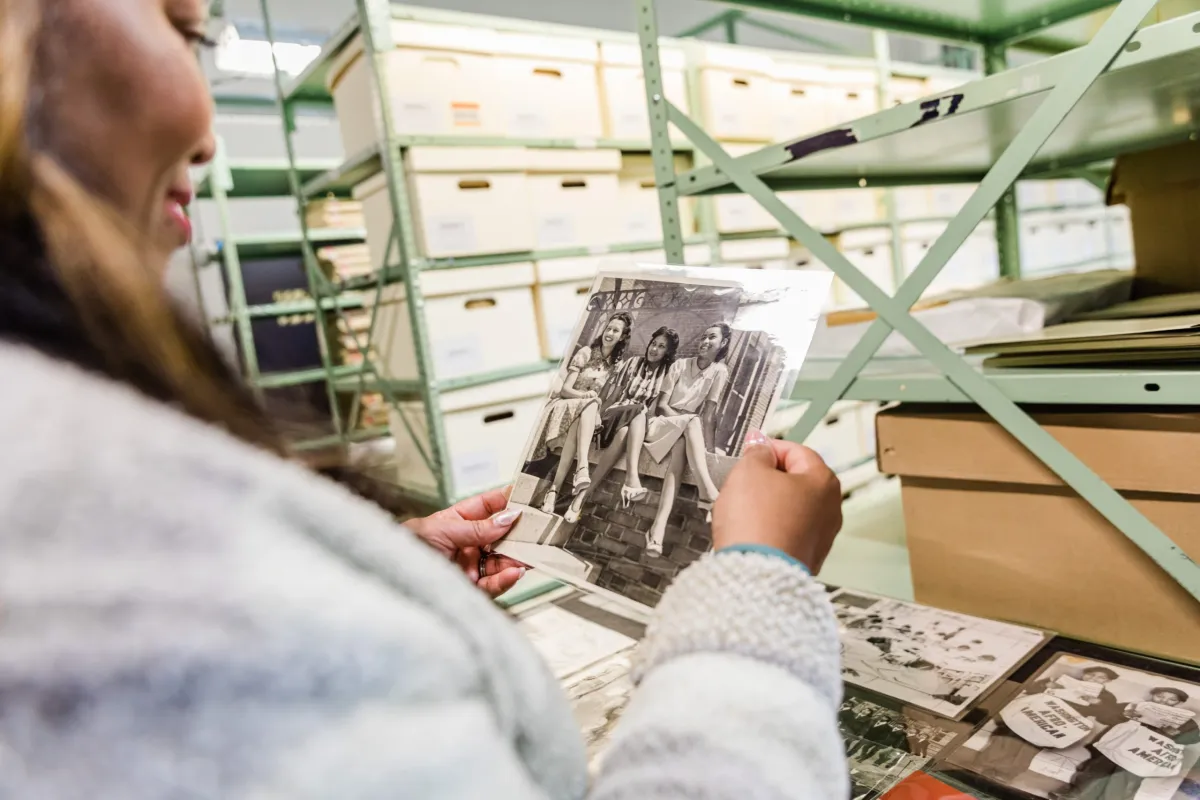
Image credit: Vedet Coleman-Robinson, PhD, president and CEO of the Association of African American Museums, visits The AFRO Archives (photo by Megapixels Media, courtesy the AAAM)